Personal
- Born
-
18 September 1917
- Place of birth
-
Bristol, England
- Died
-
1 December 2012
- International
-
3/0 - 19.11.1947 Debut 18.10.1947 vs. Wales
- Other clubs
-
Bristol St George (1932-33), Bristol Rovers (1933-36); Bristol Rovers (2 / 1939-40), Brighton & Hove Albion (1940-44), Newcastle United (1941-42), Leeds United (1942-43) wartime guest
At Liverpool
- Positions
-
Defender, Forward
- Signed from
-
Bristol Rovers
- Joined
-
14 March 1936
- Contract expiry
-
30 June 1954
Liverpool career
343
AppearancesApps
32
Goals
- League 312 apps · 32 goals
- Win ratio 39.07% — W 134 · D 98 · L 111
- Wartime 102 apps · 25 goals
- Assists not recorded before 1945–46
Player profile
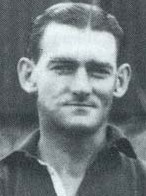
Taylor changed from a promising centre-forward into a classy right-half who took over the captaincy from Jack Balmer in the 1949/50 season. Taylor harboured ambitions to become a county cricketer if his football career wouldn't work out. He played briefly for his hometown club Rovers before joining Liverpool in March 1936. Taylor scored a last-minute goal at Derby on his debut on 28 March 1936 to save a point in a 2-2 draw and made a further six first division appearances before the season closed, also netting against Blackburn Rovers. Liverpool finished in nineteenth place that year and only one place higher the following year before climbing to mid-table respectability by the end of the decade as World War II drew ever closer. Liverpool won the first post-war League championship and Taylor, by now approaching his peak at 29-years-old, played in 35 of the 42 League matches and made three appearances for the England team in the autumn of 1947. "It was a very different world back then for a player, Taylor remembers. "When I first played for Liverpool we didn't even have our own training ground, because the club didn't buy Melwood from St. Francis Xavier School until the early fifties. Most of our training on Tuesday, Wednesday and Thursday consisted of running with virtually no work on individual skills or team tactics at all. I think a modern player would have ten fits wearing the kind of boots we wore. Ours were so heavy, with solid toecaps that could murder you if you were kicked. I can remember sitting with my boots in a tub of water, so they would shrink to fit my feet." Taylor would continue to a key member of the team for the next four years. He captained Liverpool through their run to the club's first-ever Wembley cup final in 1950 but there was only disappointment after a 2-0 defeat by Arsenal. Once he had passed his thirtieth birthday, Taylor was selected less frequently. He remained at Anfield when he retired as a player in 1954, serving as chief coach before replacing Don Welsh as manager in May 1956.
Taylor found the pressure of getting Liverpool back into the top division almost intolerable. Just missing out on promotion in three successive seasons eventually led to his resignation in November 1959. A terrible FA Cup defeat at non-League Worcester City earlier in the year had put extra pressure on him, but when none of the five League fixtures Liverpool played in October 1959 were won, his position at the club was no longer tenable. It was over twenty-three and a half years since he had first arrived at Anfield as an 18-year-old player. A sorrowful Phil Taylor spoke to the Liverpool Daily Post about his decision: "No matter how great has been the disappointment of the directors at our failure to win our way back to the first division, it has not been greater then mine. I made it my goal. I set my heart on it and strove for it with all the energy I could muster." He later reflected on his time in the hot seat in Alan A'Court's autobiography published in 2003. "Looking back, one of the biggest differences with today was the position of the manager. At that time, teams at almost all clubs were picked by the board of directors, though they usually did ask the advice of the secretary or coach. I know both Don Welsh and myself had to present our teams to full board meetings, often involving eight or nine directors. If you had been winning, the directors were unlikely to object to your team, but it was much harder when you wanted to make changes, and I can remember times when the side that ran out was not really the one I had wanted to play. I was probably not a strong enough personality to be a good manager, because you really need to insist on being in charge if you are going to be successful." Taylor passed away on 1 December 2012, aged 95.
Appearances per season
A more detailed look at the player's appearances
| Apps |
Mins |
Opponent |
| 343 |
30,960 |
All opponents |
| 19 |
1,710 |
Middlesbrough
|
| 18 |
1,620 |
Sunderland
|
| 17 |
1,530 |
Bolton Wanderers
|
| 16 |
1,440 |
Derby County
|
| 16 |
1,440 |
Everton
|
| 15 |
1,350 |
Charlton Athletic
|
| 15 |
1,350 |
Wolves
|
| 14 |
1,260 |
Arsenal
|
| 14 |
1,260 |
Aston Villa
|
| 14 |
1,260 |
Blackpool
|
| 14 |
1,260 |
Chelsea
|
| 14 |
1,260 |
Manchester United
|
| 14 |
1,260 |
Stoke City
|
| 13 |
1,170 |
Huddersfield Town
|
| 13 |
1,170 |
Portsmouth
|
| 11 |
1,020 |
Burnley
|
| 10 |
900 |
Birmingham City
|
| 9 |
810 |
Grimsby Town
|
| 9 |
810 |
Preston North End
|
| 9 |
810 |
West Bromwich Albion
|
| 8 |
720 |
Blackburn Rovers
|
| 8 |
720 |
Newcastle United
|
| 7 |
630 |
Brentford
|
| 6 |
540 |
Leeds United
|
| 6 |
540 |
Manchester City
|
| 6 |
540 |
Sheffield United
|
| 5 |
450 |
Fulham
|
| 4 |
360 |
Tottenham Hotspur
|
| 3 |
270 |
Leicester City
|
| 3 |
300 |
Nottingham Forest
|
| 3 |
270 |
Sheffield Wednesday
|
| 2 |
210 |
Crystal Palace
|
| 2 |
180 |
Stockport County
|
| 1 |
90 |
Chester City
|
| 1 |
90 |
Exeter City
|
| 1 |
90 |
Luton Town
|
| 1 |
90 |
Notts County
|
| 1 |
90 |
Walsall
|
| 1 |
90 |
Workington
|
| Total |
Venue |
| 172 |
Home |
| 166 |
Away |
| 5 |
Neutral |
Goals per season
The player scored 34 goals in 29 different matches.
A more detailed look at the player's goals
| Total |
Started/substitutions |
| 34 |
Started |
Wartime Appearances / Goals
| Season |
Appearances |
Goals |
| 1939-1940 |
11 |
0 |
| 1941-1942 |
8 |
2 |
| 1942-1943 |
5 |
0 |
| 1943-1944 |
4 |
2 |
| 1944-1945 |
37 |
17 |
| 1945-1946 |
37 |
4 |
| Totals |
102 |
25 |
Related Articles
The Liverpool Daily Post on 27 March 1950.