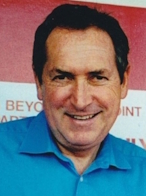
Gérard Houllier
Manager · Liverpool 1998–2004
Personal
- Born
- 3 September 1947
- Place of birth
- Thérouanne, France
- Died
- 14 December 2020
- Other clubs managed
- Noeux Les Mines (1976-82), Lens (1982-85), Paris St Germain (1985-87 and 1988), France international team (1992-93), Lyon (2005-07), Aston Villa (2010-11)
At Liverpool
- Arrived from
- France Football Fed.
- Appointed
- 12 November 1998
- First match
- 14 November 1998
- Final match
- 15 May 2004
- Left the club
- 24 May 2004
- Time in charge
- 5 years, 6 months
Liverpool record
- 216 league games · First match 14 November 1998 · Final match 15 May 2004
Season by season
Full season record →- 1998-99 7th from Nov 1998
- 1999-2000 4th
- 2000-01 3rd 3 trophies
- 2001-02 2nd 1 trophy
- 2002-03 5th 1 trophy
- 2003-04 4th
Final league position for seasons he finished; position at the end of his spell for seasons he didn't.
Honours
5 trophiesTrophy count excludes the Charity/Community Shield.
Manager profile
One of Gérard Houllier’s first moves was to bring former captain Phil Thompson back to Anfield as his assistant. It was a popular appointment, reflecting both Thompson’s deep connection with the club and Houllier’s intent to restore identity and discipline behind the scenes. Houllier’s tenure began in difficult circumstances. A home defeat to Leeds United marked Liverpool’s third loss at Anfield in a week, and further setbacks followed as the new management team attempted to reshape a side that had underperformed. There was an early exit from Europe where Celta Vigo beat Liverpool home and away but at the time there were still restrictions on the number of foreign players that could participate and this affected the team that could be named for those matches. Steven Gerrard was introduced into the first-team as a late substitute in the home fixture with Blackburn at the end of November but results were inconsistent and a finishing place of 7th was not enough to guarantee European football for the next season. The most heartbreaking result came at Old Trafford in the FA Cup 4th round when Liverpool held on to Michael Owen’s early goal until the match was virtually over, only to concede two goals in injury-time. Defeat to United was bad enough on its own; the fact that United went on to win that cup and the Treble just made it harder to bear.
The winds of change swept through Anfield in the summer. Sami Hyypia and Stephane Hechoz had arrived to bolster an at times fragile defence; and with immediate effect because 19 fewer goals were conceded in the league than during the previous season. Other arrivals included Titi Camara as a forward and Vladimir Smicer in midfield. But four league defeats before the end of September did not suggest that the club was suddenly about to challenge for the major prizes again. However, a decent second half to the season which included a run of only 1 defeat in 18 league matches saw the team climb the table until they were in with a realistic chance of claiming a place in the lucrative Champions’ League. But it all fell apart in the final weeks of the season. There were no wins in the final 5 fixtures and not even a goal to cheer. Defeat on the final day at Bradford City meant that the Yorkshiremen secured their place in the top division and at the same time consigned Liverpool to the UEFA Cup.
Several more signings of variable quality arrived. The experience of Markus Babbel and Gary McAllister was welcome and the latter became a real talisman for the side, especially in the closing weeks of what was to be a truly remarkable season. Other signings, including Nick Barmby, Christian Ziege and Jari Litmanen, had less lasting impact. The team was proving difficult to beat and although 9 league defeats was the same as the previous season, three of those (all away) came during a depressing spell in November. The final league position was improved by one place to 3rd and although faced with having to win their final match again to qualify for the Champions League, this was achieved with some comfort at the Valley, where it should be noted that Charlton’s supporters gave the Liverpool team very genuine applause considering they had been on the wrong end of a 4-0 scoreline.
It was in the cup competitions that Liverpool took their place in the history books with an unprecedented triple success. It took penalties to beat a stubborn Birmingham City side in the League cup and the team certainly enjoyed some huge slices of luck in the FA Cup final with Arsenal, being outplayed for most of the match before Michael Owen’s two late strikes at last saw some sort of revenge for three previous final defeats by the Gunners. But perhaps the UEFA cup adventure was the most praiseworthy. The club certainly had some favourable draws in the two domestic knock-out competitions but the same could not be said of the final stages of the European equivalent, where Roma, Porto and Barcelona had to be faced in consecutive rounds. Winning in Rome’s Olympic Stadium was a massive achievement, even if the second leg ended in controversy after the Spanish referee appeared to give the Italians a chance of equalising the aggregate score only to change his mind and give a corner-kick after seeming to originally point to the spot following a handball in the area by Babbel. Gary McAllister’s confident penalty was the only goal of the semi-final with Barcelona and he repeated that feat in Dortmund in a crazy match that finally saw Liverpool prevail over Alaves with a ‘golden goal’ own-goal in the closing minutes of extra-time.
There were now real hopes of mounting a serious challenge for the championship in 2001-2002. Once again Liverpool improved their final league position by one place. 80 points might have won the title in other seasons but it wasn’t enough to beat a very good Arsenal team. The manager proved that he wasn’t afraid to make difficult and controversial decisions. Sander Westerveld’s late error at Bolton meant that he was ruthlessly axed with Dudek and Kirkland immediately arriving to replace him. Houllier had already moved Ince on and it became clear the manager was not a man to mess with. But his own situation changed dramatically during the home match with Leeds in October 2001. He failed to come out for the 2nd half and it was later announced that he had been rushed into hospital for immediate and life-saving heart surgery. It was a big shock to the whole club but Phil Thompson stepped in to deputise and did an admirable job until Houllier returned to take his place on the bench before an emotional match with Roma in the middle of March. The team got safely through the two group stages of the Champions’ League and had real hopes of further progress when they were paired with the Germans of Leverkusen. But a narrow home victory was not enough. Houllier controversially substituted Hamann for Smicer after an hour and the tie was eventually lost 4-3 on aggregate.
Optimism was higher than ever during the summer of 2002 and with good reason. The team made a blistering start to the league programme with 9 wins and 3 draws from the opening dozen matches. But the next match at Middlesbrough would prove to a real watershed in Liverpool’s season and probably looking back on Houllier’s management too. The manager was criticised for having too cautious an approach in a match that a confident team should have been capable of winning. It resulted in a 1-0 defeat. Liverpool would not taste victory again in a league match until the second half of January, a terrible run that hadn’t been seen since the relegation season of 1953-54. As the performances and results worsened, so did the criticism. A fortune had been spent in the summer on Diouf, Cheyrou and Diao. None of them proved to be worth a fraction of what the club had paid for them. The team had failed to negotiate the opening group stage of the Champions’ League and Liverpool were knocked out of the UEFA Cup by Celtic despite managing a decent 1-1 draw in the away leg in Glasgow. What probably saved the manager was another success in the League Cup, this time against bitter rivals Manchester United. But everyone knew that it wasn’t the sort of success the club really craved.
Harry Kewell arrived from Leeds and the two French starlets le Tallec and Pongolle were also paraded pre-season. But there were many comparisons with 2002-2003 when it came to form and lack of entertainment. One difference however was that there was no Champions’ League football to look forward to and no consolation cup victory either. The manager’s excuses became more and more difficult to listen to. Playing in the Champions’ League was financially important for the club but many supporters found it difficult to associate a ‘target’ of finishing 4th the success as Houllier made it out to be. This target was reached, perhaps as much due to Newcastle’s faltering end to the season as his own team’s ability, but it wasn’t enough to pacify the Liverpool board and during the following week a press conference was called to announce that Houllier would be leaving the club with one year of his contract still to run. Who knows how much his life-threatening illness took out of Gérard Houllier? But he was never the same man after he returned. Certainly some of his expensive signings failed to deliver the goods but he also changed a lot of the negative culture that can be around a football club when it comes to diet and lifestyle. Houllier was also criticised for his failure to blood more youngsters in the team and there does seem to have been some friction between himself and Steve Heighway at the Academy. Four trophies in five seasons gave the supporters some unforgettable memories. Gérard Houllier had a dream for Liverpool Football club, a dream that he wasn’t allowed to fulfil. Right to the end, he still believed he was the man to take Liverpool that one step further, but it was the end of the road. He had made necessary changes to the club and modernized its way of thinking and almost gave his life in service for the club.
A year after leaving Liverpool, Houllier signed a two-year contract with Lyon, the French club which had just won four consecutive Ligue 1 championships. He increased that run to six but was unable to convert Lyon's dominance of their domestic game on to the European stage. Towards the end of May 2007 he left Lyon. The club's view was that he had asked to be released; the man himself declared that he needed a break after the stress of managing the club for two years. Gérard returned to the English game in September 2010, taking over from Martin O'Neill at Aston Villa. One of his first jobs was to appoint Gary McAllister to be his Assistant Manager, Gary being a man he knew well from his Liverpool days. However, Villa did not start the 2010-11 season in good form and only collected 21 points from the opening 20 Premier League games. They were knocked out of the League cup by local rivals and eventual winners, Birmingham City. The first-team squad suffered numerous injuries and lost heavily in the F.A. cup to Manchester City. On the 20th of April Houllier was taken to hospital to undergo tests after falling ill in the night. It wasn't a major surprise when Aston Villa announced early in June 2011 that Houllier would be leaving the club less than a year after he was appointed to be manager. Villa officials were said to be concerned that a return to the dugout could cause further health issues. Gérard himself declared "I am extremely disappointed that I will not have the opportunity to manage Aston Villa next season. My health has improved considerably since I was taken ill on the 20th of April. I now intend to take the next few months to concentrate on recuperating fully before I may return to football."
Houllier later served as head of global football for Red Bull, overseeing clubs in Salzburg, Leipzig and New York. Houllier died on 14 December 2020, the very same day Liverpool drew Red Bull Leipzig in the last 16 in the Champions League. Houllier is remembered as a warm and generous person who revolutionized Liverpool's way of thinking and brought them into the 21st Century.
More on Gérard Houllier
Quotes 14
“The players country is Liverpool Football Club and their language is football.”
All quotes →Record
| Competition | Total | Won | Draw | Lost | Goals for | Goals against |
|---|---|---|---|---|---|---|
| Grand totals | 307 | 160 | 73 | 74 | 516 | 298 |
| League | 216 | 108 | 54 | 54 | 354 | 212 |
| FA Cup | 19 | 12 | 2 | 5 | 32 | 15 |
| League Cup | 18 | 13 | 0 | 5 | 50 | 24 |
| Europe | 52 | 26 | 17 | 9 | 78 | 45 |
| Other | 2 | 1 | 0 | 1 | 2 | 2 |
Related Articles
Houllier's recruits in 2000-2001
Liverpool's summer signings in the 2000/2001 season raised more than a few eyebrows.
Seven arrive in the summer of 1999
We wanted to refresh your memories how Liverpool has done in the market in recent years.
The story behind the Liverpool experiment doomed to failure from the start
LFC Stories: What happened when Roy Evans and Gerard Houllier were joint managers? 2 DEC 2019
Gerard Houllier - Ruthless?
Interview with Gerard Houllier by Paul McCarthy. Published on 11 February 2001.
Returning Gerard Houllier inspired the Reds to produce one of the greatest Anfield nights
LFC.tv report on Liverpool - Roma on 19.03.2002.
Gerard Houllier gets warm welcome, but chilled by result
Liverpool Echo press report on Liverpool - Aston Villa on 06.12.2010.
Houllier's official stats
As Gerard Houllier prepared to return to Anfield for the first time as an opposition manager, the Official Liverpool website took a look back at his six-year Liverpool tenure in numbers. Authors: James Carroll and Ged Rea.
Bunkering down with Houllier
Ian Ridley inter Houllier after his return in The Observer on 7th April 2002.
The Peter Robinson Years
Liverpool Echo article on 20th March 2000.
Determined Liverpool vindicate Houllier
The Telegraph report on Liverpool - Middlesbrough on 02.05.2004.
Another imperfect day for Houllier
The Telegraph report on Liverpool - Charlton on 12.04.2004.
Liverpool Daily Post report
Match report by Liverpool Daily Post on Liverpool - Derby on 06.11.1999.
Reds end of season report
Chris Bascombe interviews Gerard Houllier at the end of the 1999-2000 season.
Houllier's downfall
An article from Garstonite on RAWK on 9th July 2005.
Evans: Why I quit Liverpool
Report by Garry Doolan, Daily Post in 1999.
It's a wonder that Houllier's in Gerland
Paul Doyle simply can't understand why Lyon think Gérard Houllier can bring them the Champions League
2001-2007: Into The New Millennium
For the first time in 16 long years since the shame and tragedy that was Heysel, Liverpool took their place in European football's top club competition. Chris Wood documents Liverpool's European history.
The final Gerard Houllier interview
For the last time as LFC boss, Gerard Houllier sat down to speak to lfc.tv. Clearly emotional on what he admits is his saddest day in football, Houllier spoke of his time in charge at Anfield and also of his hopes for the future.
Houllier's stats
lfchistory.net is designed for every statistician who wishes to study Liverpool's history through facts and figures.