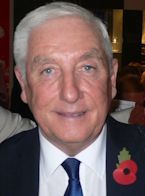
Roy Evans
Manager · Liverpool 1994–1998
Personal
- Born
- 4 October 1948
- Place of birth
- Bootle, Merseyside, England
- Other clubs managed
- Fulham (joint-caretaker manager 2000), Crystal Palace (Director of Football 2000-01), Wales (assistant manager 2004-10)
At Liverpool
- Arrived from
- LFC coach
- Appointed
- 31 January 1994
- First match
- 5 February 1994
- Final match
- 10 May 1998
Liverpool record
- 172 league games · First match 5 February 1994 · Final match 10 May 1998
Season by season
Full season record →Final league position for seasons he finished; position at the end of his spell for seasons he didn't.
Honours
1 trophy- League Cup
- 1995
Trophy count excludes the Charity/Community Shield.
Manager profile
Roy inherited a decent squad of players. Fowler and McManaman were exciting young players who were establishing themselves in the first team and there seemed to be a good blend of youth and experience to carry the club forward. His first full season in charge promised that brighter times were ahead. At the turn of the year his team was in 3rd place with 45 points from 23 games, only one point behind 2nd placed Manchester United. Liverpool’s first trophy in 3 years came in the form of the Coca Cola (League) cup. With Stan Collymore signed before the start of the 1995-96 season to join Fowler in a scintillating partnership up front, it heralded two years of at times quite breathtaking football, including the two memorable 4-3 victories over Newcastle at Anfield in successive seasons. Evans was being celebrated at the heart of Liverpool’s revival. His man-management had replaced Souness's autocratic style and Liverpool were playing entertaining football. Supporters were concerned that at times the Liverpool side played great football but in between was well below average. This inconsistency proved to be Roy Evans’ downfall. His side looked promising for the first few months of a season but then it always seemed to fall apart and end in disappointment.
In the end the only tangible success came in that 1995 League cup final at Wembley, where Bolton were beaten 2-1 to record the club’s 5th success in the competition. It could have been so different. Roy wasn’t as far from bringing the championship back to Anfield as some think. Their best chance came in the 1996-97 season. They were in a very strong position after winning at Southampton in the final match of the calendar year but were gradually overhauled by Manchester United, Even then, Liverpool had a chance to regain top spot the day after United surprisingly lost to Derby County at Old Trafford early in April. After taking the lead against Coventry, they lost it and then the game in the final few minutes in front of a stunned home crowd. The next home match was also lost, more crucially against United. Football is full of “ifs” and “buts” yet it’s a fact that if Liverpool had won those two home games they and not United would have been crowned champions that season.
Roy’s time in charge coincided with the rise of “The Spice Boys”, a term given to a group of the club’s players indicating that Evans was maybe too nice to be manager of such a high-profile club and didn’t have full control of some of his players. The cliché suggested that some of his players were not behaving as professionally off the pitch as they were on it. In some cases behaviour on the pitch wasn’t what was expected either. Some of it didn’t emerge until after Roy had left but Neil Ruddock’s infamous “passing the pound coin around the back four” tale gives some idea of the lack of respect some of the players showed towards their manager and indeed the club that was paying their wages.
United were the thorn in Liverpool’s side during Roy’s time as manager, just as they were for practically every club in the 1990’s. Apart from the near-miss in the championship in 1996-97, the players reserved one of their worst performances under his management for one of the most important matches, the 1996 F.A. cup final, remembered as much for the “men in white suits” who didn’t perform once they had changed out of them as it was for Cantona’s late goal.
There is a very thin line between success and failure sometimes. Because of everything that had gone on before in the previous three decades, Liverpool were expected to win trophies. When they dried up in the 1990s, there was more pressure on the manager than there would have been at other clubs, clubs who would have been overjoyed to finish in the top 4 or 5 at the end of a season and win the occasional cup competition. Roy was probably unlucky that he didn’t win more than just that 1995 League cup. It certainly wasn’t for the lack of trying on his part. He was never afraid to face the Press when things weren’t going to plan and his pride in the job and his enthusiasm and love for the football club he had played for and been associated with for so long were never in doubt. But however hard he had tried, real success by the club’s high standards hadn’t been achieved.
During the summer of 1998, it was announced that Roy’s responsibility would be shared by Frenchman Gérard Houllier. It would not be a happy partnership nor one that would last long.
More on Roy Evans
Quotes 7
“Attitude, simple as that. The ability in the team was phenomenal. The discipline was lacking and I'll hold my hands up at the time. It's cer…”
All quotes →Record
| Competition | Total | Won | Draw | Lost | Goals for | Goals against |
|---|---|---|---|---|---|---|
| Grand totals | 226 | 117 | 56 | 53 | 375 | 216 |
| League | 172 | 83 | 46 | 43 | 280 | 173 |
| FA Cup | 17 | 9 | 4 | 4 | 29 | 13 |
| League Cup | 21 | 17 | 1 | 3 | 42 | 14 |
| Europe | 16 | 8 | 5 | 3 | 24 | 16 |
Related Articles
Stan Collymore was a strange one
Liverpool and Roy Evans took an enormous chance by paying a record fee for Stan Collymore in 1995.
Scales and Babb join Roy Evans
Roy Evans bought Liverpool a pair of central defenders in 1994.
The story behind the Liverpool experiment doomed to failure from the start
LFC Stories: What happened when Roy Evans and Gerard Houllier were joint managers? 2 DEC 2019
Roy Evans - 35 years of pure dedication
Roy Evans; youth player, first-team player, kit washer, physio, coach, reserve and first-team manager of Liverpool Football Club. An exclusive interview by LFChistory.net.
On second thoughts ... Roy Evans
An article by Rob Smyth in the Guardian on 15th of February 15, 2007.
Sixth defeat in a row
Match report from 19.03.1994 on Liverpool - Chelsea from British soccer week.
Back to basics for Evans
Roy Evans has stepped out of the Liverpool shadows in an attempt to banish the dark days at Anfield. An article from 10th February 1994 from British Soccer Week.
Gunn had to go says City boss
Match report from 05.02.1994 on Norwich City - Liverpool from British Soccer Week.
Evans: Why I quit Liverpool
Report by Garry Doolan, Daily Post in 1999.
Roy Evans quits as Liverpool boss
Roy Evans today parted company with Liverpool, the club he has served for 35 years. Joint manager Gerard Houllier will take sole control of the club.