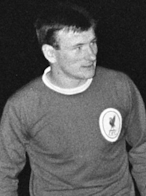
Tommy Smith
Defender · Liverpool 1962–1978
Personal
- Born
- 5 April 1945
- Place of birth
- Liverpool, England
- Died
- 12 April 2019
- International
- 1/0 Debut 19.05.1971 vs. Wales
- Other clubs
- Tampa Bay Rowdies (loan 1976), Los Angeles Aztecs (loan 1978), Swansea City (1978-79)
At Liverpool
- Signed from
- Local
- Joined
- 1960 - Professional 5 April 1962
- Debut
- 8 May 1963
- First goal
- 29 August 1964
- Last goal
- 8 April 1978
- Last appearance
- 25 April 1978
- Left the club
- 17 August 1978
Liverpool career
- League 467 apps · 36 goals · 33 assists
- Win ratio 53.76% — W 343 · D 165 · L 130
Honours
- European Super Cup
- 1977
Player profile
Smith was moved to centre of defence on 5 December 1964 in a 5-1 League win against Burnley and never looked back. Despite often wearing the No. 10 jersey, Smith never was the inside-forward that his shirt number suggested, something which was to confuse foreign opponents who expected him to venture further up the field than he did. By the end of the season, 20-year-old Smith had become a regular member of the side and featured in the emotional day at Wembley when Liverpool won the FA Cup for the first time. For the next ten years, Smith was a fixture in the team. He only missed 41 out of 420 first division fixtures and was able to claim the No. 4 shirt almost exclusively as his own. Later in his Liverpool career, he played as right-back until he lost his place to the up and coming Phil Neal.
Smith shared in the remarkable success of the mid-'60s but was young enough to survive the changes that inevitably came as the decade ended and Bill Shankly started to rebuild for the future. He saw in Tommy the leadership qualities that he knew would help and encourage younger players and new signings and made him captain in March 1970. Smith revelled in the role and in his first full season as captain Shankly declared: "If Smith isn't named Footballer of the Year, football should be stopped and the men who picked any other player should be sent to the Kremlin." Members of the Football Writers' Association voted Frank McLintock. Smith held on to the armband until November 1973 following a row with Shankly just prior to kick-off at Highbury as he had been dropped from the starting 11 facing Arsenal. Smith left the stadium and took the next train home to Liverpool. He came close to leaving the club but soldiered on and quickly won his place back. Replaced by Emlyn Hughes as captain, Smith moved back to right-back as Chris Lawler's Anfield career neared its end. He only missed one of the remaining 25 League games and collected his second FA Cup winners' medal in the 3-0 win over Newcastle United, the biggest margin of victory in such a final since 1960.
Phil Neal's arrival threatened Smith's place in the side but his versatility enabled him to cover either full-back position and also the centre of the defence. He was still a very valuable player to have around, despite by now being in his 30's. New manager Bob Paisley knew in any case all about his courage and strength and how intimidating he could be to opponents. Smith utilised his fear factor to the fullest. "I did warn players. When Tottenham striker Jimmy Greaves came out at Anfield one time I handed him a piece of paper. He said: 'What's this?' I said: 'Just open it.' It was the menu from the Liverpool Infirmary. I make no bones about it, that's what I was good at. Some players were good dribblers, others good headers, I was a hard tackler and I used it to gain that 'edge' that Shanks was always looking for."
Smith announced that the 1976/77 season was to be his last. Phil Neal and Joey Jones were regulars at full-back and the young Phil Thompson was proving to be reliable in another position that Smith could cover with equal competence. Smith had only played three times in the League when he won a regular spot following Phil Thompson's injury in March. Smith played in the last 13 League fixtures, made his fourth FA Cup final appearance for the club and also made the team for the European Cup final in Rome. Expected beforehand to be his last game as a Liverpool player, just playing in such a match in such an arena would have satisfied most men, but not Tommy Smith! With the final tensely balanced at 1-1 and with Borussia sensing their chances after Simonsen's equaliser, he met Steve Heighway's left-wing corner firmly with his head to send the ball flashing past Wolfgang Kneib. Neal's late penalty secured Liverpool's greatest triumph and the team returned to an extraordinary welcome and, as fate would have it, Smith's own testimonial fixture at Anfield two days after the final, at which the giant and coveted trophy was proudly paraded. Smith decided to play one more season and made another 34 first-team appearances. An accident in his garden in April when he dropped a big hammer on his foot, ended his Liverpool career a month too soon. Smith moved to Swansea City, six months after his former teammate John Toshack had been appointed as player-manager at the Vetch Field. Before finally retiring as a player, he helped the Swans out of the old Third Division on their meteoric rise from the Fourth to the First.
Bob Paisley enjoyed having Tommy Smith in his ranks. "His fearless nature not only unsettled the opposition, it inspired his teammates. They drew strength from his example. It was a little bit like having a big brother around to sort out any trouble you got into. Seeing Tommy racing on to the field after having a couple of stitches inserted into a head wound could put courage into the most cowardly of hearts – as long as you were on his side!"
Tommy Smith can rightly be classed as one of the most consistent and influential players ever to have been at Anfield. During his long spell at Anfield, he won four league championships and played in four FA Cup finals as well as in the finals of all three European club competitions. Only Borussia Dortmund's bizarre extra-time winner at Hampden Park in 1966 and Liverpool's apathetic attitude towards the League Cup in its early days probably prevented him from having a medal haul that no other British player could ever match. After retiring as a player, Smith looked after his business interests on Merseyside and later became a respected member of the Liverpool Echo's sports department. Poor health and a bad car accident affected his journalistic activities, but he coped with those adversities with the same courage and determination that will always be remembered whenever he wore a Liverpool shirt.
Appearances per season
| Season | League | FA | LC | Europe | Other | Total |
|---|---|---|---|---|---|---|
| 1962-1963 | 1 | 0 | 0 | 0 | 0 | 1 |
| 1963-1964 | 0 | 0 | 0 | 0 | 0 | 0 |
| 1964-1965 | 25 | 8 | 0 | 7 | 0 | 40 |
| 1965-1966 | 42 | 1 | 0 | 9 | 1 | 53 |
| 1966-1967 | 42 | 4 | 0 | 5 | 1 | 52 |
| 1967-1968 | 36 | 7 | 2 | 6 | 0 | 51 |
| 1968-1969 | 42 | 4 | 3 | 2 | 0 | 51 |
| 1969-1970 | 36 | 3 | 2 | 4 | 0 | 45 |
| 1970-1971 | 41 | 7 | 3 | 10 | 0 | 61 |
| 1971-1972 | 37 | 3 | 1 | 3 | 1 | 45 |
| 1972-1973 | 33 | 2 | 4 | 10 | 0 | 49 |
| 1973-1974 | 34 | 7 | 5 | 3 | 0 | 49 |
| 1974-1975 | 36 | 0 | 4 | 4 | 1 | 45 |
| 1975-1976 | 24 | 2 | 0 | 9 | 0 | 35 |
| 1976-1977 | 16 | 4 | 0 | 7 | 0 | 27 |
| 1977-1978 | 22 | 0 | 6 | 6 | 0 | 34 |
| Totals | 467 | 52 | 30 | 85 | 4 | 638 |
A more detailed look at the player's appearances
| Total | Started/substitutions |
|---|---|
| 637 | Started |
| 4 | Substituted |
| 1 | Substitute |
| 7 | On bench |
| Total | Venue |
|---|---|
| 308 | Home |
| 312 | Away |
| 18 | Neutral |
| Total | Competition |
|---|---|
| 467 | League |
| 52 | FA Cup |
| 30 | League Cup |
| 26 | European Cup |
| 22 | European Fairs Cup |
| 19 | UEFA Cup |
| 16 | European Cup Winners Cup |
| 4 | Charity Shield |
| 2 | European Super Cup |
| Total | W | D | L | Win% | Manager |
|---|---|---|---|---|---|
| 498 | 263 | 129 | 106 | 52.8% | Bill Shankly |
| 140 | 80 | 36 | 24 | 57.1% | Bob Paisley |
Goals per season
| Season | League | FA | LC | Europe | Other | Total |
|---|---|---|---|---|---|---|
| 1964-1965 | 4 | 0 | 0 | 0 | 0 | 4 |
| 1965-1966 | 3 | 0 | 0 | 1 | 0 | 4 |
| 1966-1967 | 1 | 0 | 0 | 0 | 0 | 1 |
| 1967-1968 | 3 | 1 | 1 | 1 | 0 | 6 |
| 1968-1969 | 6 | 1 | 0 | 0 | 0 | 7 |
| 1969-1970 | 4 | 0 | 0 | 3 | 0 | 7 |
| 1970-1971 | 2 | 0 | 1 | 0 | 0 | 3 |
| 1971-1972 | 6 | 0 | 0 | 0 | 0 | 6 |
| 1972-1973 | 2 | 0 | 0 | 1 | 0 | 3 |
| 1973-1974 | 1 | 0 | 0 | 0 | 0 | 1 |
| 1974-1975 | 2 | 0 | 0 | 1 | 0 | 3 |
| 1976-1977 | 0 | 0 | 0 | 1 | 0 | 1 |
| 1977-1978 | 2 | 0 | 0 | 0 | 0 | 2 |
| Totals | 36 | 2 | 2 | 8 | 0 | 48 |
The player scored 48 goals in 45 different matches.
A more detailed look at the player's goals
| Total | Opponent |
|---|---|
| 4 | Burnley |
| 3 | Blackburn Rovers |
| 3 | Everton |
| 3 | Leicester City |
| 3 | Wolves |
| 2 | Arsenal |
| 2 | Chelsea |
| 2 | Dundalk |
| 2 | Nottingham Forest |
| 2 | Stoke City |
| 2 | Sunderland |
| 2 | West Ham United |
| 1 | AEK Athens |
| 1 | Birmingham City |
| 1 | Bolton Wanderers |
| 1 | Borussia Moenchengladbach |
| 1 | Celtic |
| 1 | Coventry City |
| 1 | Huddersfield Town |
| 1 | Ipswich Town |
| 1 | Leeds United |
| 1 | Luton Town |
| 1 | Manchester United |
| 1 | Mansfield Town |
| 1 | Queens Park Rangers |
| 1 | Strømsgodset |
| 1 | Tottenham Hotspur |
| 1 | TSV Munich |
| 1 | Vitoria Setubal |
| 1 | West Bromwich Albion |
| Total | Started/substitutions |
|---|---|
| 48 | Started |
| Total | Competition |
|---|---|
| 36 | League |
| 4 | European Fairs Cup |
| 2 | European Cup Winners Cup |
| 2 | FA Cup |
| 2 | League Cup |
| 1 | European Cup |
| 1 | UEFA Cup |
| Total | Goal minute period |
|---|---|
| 5 | 1-15 minutes |
| 4 | 16-30 minutes |
| 13 | 31-45 minutes |
| 8 | 46-60 minutes |
| 6 | 61-75 minutes |
| 12 | 76-90 minutes |
| Total | Assisted by |
|---|---|
| 3 | Emlyn Hughes |
| 2 | Peter Thompson |
| 2 | Roger Hunt |
| 1 | Gerry Byrne |
| 1 | Ian St John |
| 1 | Jimmy Case |
| 1 | Ray Clemence |
| 1 | Steve Heighway |
Assists per season
| Season | League | FA | LC | Europe | Other | Total |
|---|---|---|---|---|---|---|
| 1964-1965 | 2 | 0 | 0 | 0 | 0 | 2 |
| 1965-1966 | 4 | 0 | 0 | 0 | 0 | 4 |
| 1966-1967 | 1 | 0 | 0 | 0 | 0 | 1 |
| 1967-1968 | 0 | 2 | 0 | 0 | 0 | 2 |
| 1968-1969 | 4 | 0 | 0 | 0 | 0 | 4 |
| 1969-1970 | 4 | 0 | 0 | 0 | 0 | 4 |
| 1970-1971 | 5 | 0 | 0 | 0 | 0 | 5 |
| 1971-1972 | 3 | 0 | 0 | 1 | 0 | 4 |
| 1972-1973 | 1 | 0 | 0 | 0 | 0 | 1 |
| 1973-1974 | 3 | 2 | 0 | 0 | 0 | 5 |
| 1974-1975 | 3 | 0 | 0 | 2 | 0 | 5 |
| 1975-1976 | 2 | 0 | 0 | 2 | 0 | 4 |
| 1976-1977 | 0 | 1 | 0 | 0 | 0 | 1 |
| 1977-1978 | 1 | 0 | 0 | 0 | 0 | 1 |
| Totals | 33 | 5 | 0 | 5 | 0 | 43 |
A more detailed look at the player's assists
| Total | Opponent |
|---|---|
| 4 | Burnley |
| 3 | Arsenal |
| 3 | Newcastle United |
| 3 | West Ham United |
| 2 | Coventry City |
| 2 | Ipswich Town |
| 2 | Southampton |
| 2 | Stoke City |
| 2 | Strømsgodset |
| 1 | Aston Villa |
| 1 | Blackburn Rovers |
| 1 | Blackpool |
| 1 | Bournemouth |
| 1 | Chelsea |
| 1 | Derby County |
| 1 | Everton |
| 1 | Huddersfield Town |
| 1 | Leeds United |
| 1 | Middlesbrough |
| 1 | Nottingham Forest |
| 1 | Queens Park Rangers |
| 1 | Real Sociedad |
| 1 | Servette |
| 1 | Sheffield Wednesday |
| 1 | Slask Wroclaw |
| 1 | Sunderland |
| 1 | Tottenham Hotspur |
| 1 | Walsall |
| 1 | Wolves |
| Total | Competition |
|---|---|
| 33 | League |
| 5 | FA Cup |
| 3 | European Cup Winners Cup |
| 2 | UEFA Cup |
| Total | For player |
|---|---|
| 5 | Emlyn Hughes |
| 5 | Kevin Keegan |
| 5 | Steve Heighway |
| 4 | Roger Hunt |
| 3 | David Fairclough |
| 3 | Ian Callaghan |
| 3 | Ron Yeats |
| 2 | Alun Evans |
| 2 | Bobby Graham |
| 2 | John Toshack |
| 2 | Tony Hateley |
| 1 | Alec Lindsay |
| 1 | Chris Lawler |
| 1 | Geoff Strong |
| 1 | Ian St John |
| 1 | Peter Cormack |
| 1 | Ray Kennedy |
| 1 | Willie Stevenson |
Related Articles
One-Cap Wonders!
Owen Collins looks at the players who have gained international recognition without necessarily making the grade at the club but particularly one name on this list is a great surprise given his success.
Tommy Smith - Hard man
An exclusive interview in October 1999 by Shankly.com, one of LFChistory's websites.
Liverpool's iron man, Tommy Smith
An article in the Telegraph by Sue Mott published 22 March 2008.
Ron Yeats and Tommy Smith in a gunfight!
Tommy Smith and Rowdy Yeats had a bit of an adventure when on tour with Liverpool in 1966.
Smithy: I feared the worst
An article from liverpoolfc.tv on 13th of June 2007.
Liverpool book a passage to Rome
The Times report on FC Zurich - Liverpool on 06.04.1977.
Anfield personalities: Tommy Smith
From Liverpool's match programme on 30th April 1962.