
Shankly talking to his players at Melwood on 24th July 1963
With an up-and-coming side that didn’t have the experience, and perhaps lacked the overall quality of the established First Division teams, Liverpool needed a point of difference to compete at the highest level upon promotion; something to elevate them to the top. And the Reds had three things that gave them the edge.
For starters, Liverpool were believed to be the fittest side in the league. That instantly gave them an advantage. Phil Chisnall, the last player to make the move from Manchester United to Liverpool, described Shankly’s training as ‘back breaking’, as opposed to Sir Matt Busby’s leisurely routines at The Cliff.
Next was the style of play: pass and move. “Liverpool are the most uncomplicated side in the League,” Joe Mercer, the former Aston Villa and Manchester City manager, once said. “They drive forward when they’ve got the ball and get behind it when they haven’t.” Endless five-a-sides honed technique and awareness. Keeping the ball worked the opposition, and the Reds superior fitness could have a double impact late in game –– they got stronger as the opposition wilted. “Never pass to a red shirt in one direction when there are two in the other,” Shankly would say. “Support the man, but look to the ball. If you lose the ball work twice as hard as the opposition to get it back.” When trying to get to the heart of the simplicity inherent in Liverpool’s game, he said: “Our approach was to use the ball like a baton in a relay race. You pass it to me, I pass it to him, he passes it on. It’s the ball that is covering most of the ground — not the players.” And when the players got into the penalty area, it remained simple: “If you are in the penalty area and aren’t sure what to do with the ball, stick it in the net and we’ll discuss your options afterwards.”
On the whole, Shankly was the more distant, authoritarian character, with Paisley the approachable one. Shankly was very encouraging to the youngsters, but once players were in the senior side he became more standoffish, in order that no favouritism be showed.
In terms of the style of football, Liverpool were also patient; happy to contain teams and sit on slender leads, an understanding which grew in time with the lessons of European football. If no lead had been built up, the team would keep going until the death, often stealing late goals like a lot of the best teams, once the opposition is worn down. Despite the pass-and-move philosophy, which was in keeping with purist theories, they weren’t regarded as a beautiful side to watch. The passing was simple but effective — find the nearest red shirt, give him the ball, move into space, get it back. There were elements of Total Football that the Dutch pioneered in the ‘70s, in which full-backs attacked and no-one stayed still. But the passing wasn’t as elaborate or imaginative as some ‘60s rivals, particularly the two from Manchester. Liverpool’s was an incredibly effective style of football, rather than one about aesthetic merits.
Above all else, Liverpool were driven to succeed by the man on the sidelines, for whom second place was nowhere. “In a way the worst sort of footballers become managers,” Steve Heighway once remarked. “Only the fanatical would be silly enough to do it. They have to have the drive of Hitler. Our guy never lets you relax. The constant need is to win trophies. He never lets up.”
Unique Methods
In these days of ‘notebook managers’, scribbling thoughts throughout games, it is interesting to note that Shankly himself carried a little book everywhere he went, jotting down every idea or useful piece of information he was party to. Clearly information was seen as power to the Scot. Training systems were tabulated, players’ fitness levels were scrupulously monitored, and Shankly began having opponents watched — which in the very early ‘60s was relatively unheard of. But while he thought long and hard about the game, Shankly wasn’t the expert tactician in the ranks; by general consensus that was Bob Paisley. Shankly was more of a motivator, an expert in sports’ psychology, in the days before such a thing was taken too seriously.
Shankly’s methods often involved building up his own players while belittling the ability of the opposition –– before the game, at least. It’s obviously not much of a boon for a player to get the better of an opponent who, if Shankly was to believed, wasn’t far off being a one-legged alcoholic midget with leprosy — so only after the match would the true assessments come out. He famously told a young Kevin Keegan, who might otherwise have been overawed in his first encounter with the great Bobby Moore, that the West Ham skipper had bags under his eyes, was limping and also had dandruff, implying that the England captain, who was known to have a ‘healthy’ social life, had been out on the town again. Instantly Moore was demystified in Keegan’s eyes, and Liverpool strolled to victory. But Keegan, while no longer overawed, soon knew he was up against a masterful defender in Moore, as England’s World Cup-winning captain gave him his sternest test to date. “You’ll never play against anyone better than him,” was Shankly’s post-match admission. Another famous assessment came at Old Trafford –– Shankly writing off United’s best trio as “one’s too old, another’s got a dicky knee and the other’s a drunk.” Privately, of course, Shankly had plenty of respect for the players in question.
In many ways Shankly was the forefather of the squad system. “We don’t have eleven players here,” he would often say, “we have twenty.” Some players featured more prominently in Europe, while others were used more in the league; as an example, in 1964/65, Tommy Smith, then aged 19, played only 25 of the 42 league games, but all but two of those in the European Cup. Having inherited a massive squad in the days of the minimum wage, it was fair to say that most of them would not be involved at any point; their presence was almost pointless. Shankly culled the squad, but kept enough players to have a meaningful extended group to choose from. And while not all of them would be needed throughout the season, he liked to know he had strength in reserve. And that was a key thing — the reserve team, which he famously described as the second-best team on Merseyside (after Liverpool’s first-team), needed to be strong. New signings — experienced senior players, at that — were consigned to the second-string, but not as punishment. The reserve team was there to provide an education: to allow players to adapt to the Liverpool way, and be brought through slowly.
Shankly was also trying to innovate in terms of diet. Without the scientific knowledge today’s managers routinely call upon, he had to improvise. Having discovered that the legendary American boxer Joe Louis trained on steak, Shankly made it the mainstay of the Liverpool diet. Wherever the team travelled, the meals were always steak, chips and salad, followed by fresh fruit and cream. Players joked that they ate so much steak they became vegetarian after retiring.
Rather than flog the players ceaselessly after the summer break, the training regime was designed to ease them back to full fitness, to avoid injuries. “Some people think we’re lazy, and that’s fine,” Shankly later said. “What’s the point of tearing the players to pieces in the first few days? We never bothered with sand dunes and hills and roads. We trained on grass, where football is played.” After precisely five weeks and two days of training, the players were ready to start the season in style.
It became a Liverpool tradition to not practice set-pieces. It was taken for granted that the players were intelligent enough to improvise. Tommy Smith said that they never practiced a single corner during all his years at the club. However, as often as not the team simply appeared clueless; wasting a series of set-piece deliveries. In the days before set-pieces were so seriously scrutinised with video and computer technology –– and as such, before their importance grew –– it was understandable that the staff focused on other areas. There is only so much time in the week to prepare for matches, and only so much energy players can expend in training. It is about finding an emphasis and prioritising, because the coaching staff cannot cover everything. ‘Footballing’ sides tend to practice with the ball, while teams lacking skill will focus more on set-pieces, given that they are the easiest route to a goal if individual brilliance is at a premium.
Stamina was built via the ‘sweat box’, a device in which players would kick and dribble the ball, continually on the move within boards assembled like the wall of a house; taking the ball from one end to the other, striking it against a board, controlling the rebound and turning to head to the other end. Initially Roger Hunt, the guinea pig, could manage only 45 seconds; soon, two minutes was no problem. The routines changed, with players having to strike the ball first time, and if they missed the board another player would come in, and the first player had to win the ball back.
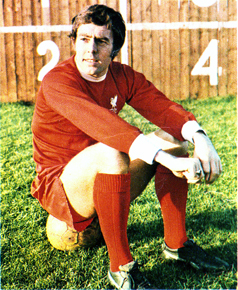 The standard football exercises of the day were employed in a type of circuit training, with Paisley blowing his whistle to move them onto the next of the six stations. These included sprints, sit-ups, squats, press-ups, some work with weights, and the boxer’s tool for aerobic stamina: a skipping rope. Two minutes of exercise would be followed by 30 seconds’ rest. Next came football-based routines, such as heading, chipping and shooting, but always done at a high tempo without a lull in proceedings; these were not casual technical lessons where everyone stood about judging artistic merit — bravo, Saint, lovely shot! — but intense exercises that replicated some of the pace of an actual game, building fitness as well as honing technique. There was also ‘Little Wembley’, a 50-yard stretch of immaculate Melwood pitch reserved for shooting, with a boarded-up goal at the end. Drawn on the boards were a series of numbers, and these were for target practice.
But it all culminated in five-a-sides, with the final hour of training given over to various small-sided games. Groups were worked out before the start of the season, to keep the teams evenly balanced. It was football based on technique, ease on the ball, ability in tight spaces. Pass and move. While the senior players faced one another, the management team often played against youngsters, either home-grown or on trial from other clubs. This gave the old heads a chance to assess the young guns, while also helping to make them feel part of the set-up. The first-team five-a-sides were ultra-competitive. Ron Yeats described them as ‘deadly’. Shankly wanted to see players giving their all, with no holding back. Fortunately, according to Yeats, there was only one serious injury from these games during his decade at the club.
This notion of fitness in small-sided matches was taken to its extreme in three-a-side encounters spread across a pitch 25 yards wide and 45 yards long. Whereas five-a-sides worked on technique in tighter areas, as well as enhancing stamina, these games prepared players for the longer sprints and wide-open areas more in keeping with a proper match. Initially players were almost instantly exhausted, but in time they managed to last longer and longer. Shankly and his assistants were promoting fitness but unlike a lot of clubs, achieved with the ball. Perhaps crucially, it honed the specific type of stamina needed for football.
(I am reminded of a story told to me by a player who had been at Crystal Palace in the late ‘70s. A top British long-distance runner was invited by Terry Venables to take a few training sessions. First on the schedule was a gruelling run. The athlete was appalled at how poorly the players coped, trailing miles in his wake. In a role reversal, he was then invited to join in with a training match. This time the players were in their element, while the athlete was choking for breath. And it is this unique kind of fitness –– jogging, sprinting, turning, jumping, sprinting again, and then being kicked up in the air by some hairy-arsed thug –– that Liverpool were focusing on over a decade earlier.)
“The system is based on exhaustion and recovery,” Shankly explained, “building up players’ stamina to enable them to produce their inherent skill and footballing ability, despite the speed of the game, from the first minute to the 90th.”
After training, Shankly felt it was important that the players were given time to cool off before showering. A bus took them from Melwood to Anfield, during which time that cooling down took place. (Years later, this process would be taken to its scientific zenith by Rafa Benítez and his coaching staff, as Ryan Babel explained: “After a match we have to stand in an ice bath for five minutes. You can be affected with cramp or lactic acid, and that causes small tears in the muscles, but by applying cold water it repairs the damage immediately. In the beginning I could only suffer it for half a minute. Even during training I was thinking about the dreaded cold water, but now I’m used to it — and it certainly works as I’m more flexible and feeling a lot better the next day.”)
Strengths
Arguably, Shankly is most famous for his renowned motivational powers. Perhaps it is because examples lend themselves to anecdotes, which become part of the folklore. Shankly made his men feel ten feet tall. To improve a player’s psychology is to equip him for battle. But it only works for so long with limited players. The technical side of the game was not overlooked.
If a player wasn’t as good as the star of a rival team, Shankly gave him a chance to believe he was. So much of success or failure in any sport is psychological. Confidence, belief, desire — they are all mental traits, not physical. Shankly tried to put his players at ease by having them share the burden. In his autobiography he detailed his instructions: “Don’t think any individual is expected to win the game by himself. Don’t worry that we are depending on you too much. Share out the worries. We want all of you to do something. So don’t take too much on your plate or put too much in your thoughts and frighten yourself to death. You are as much responsible as the next man for winning, or losing.” Shankly also introduced a new wage structure that was based around win bonuses — so players had to earn what they took home. There was an extra incentive to win; players could no longer coast their way to a living.
In 1973, Phil Thompson, who’d made his debut a year earlier, had been left out of the side to face Arsenal at home. Upset, he went to see Shankly for an explanation. The manager’s response was typical of his unique gifts. “Christ, son, you say you’re upset because I left you out? Son, you should be thanking me. That side on Saturday was rubbish, absolute rubbish. You should be thanking me for leaving you out. One day you’ll captain this club, play for England, and maybe captain England too. [All of which came true.] And then one day you’ll realise and you’ll thank me for leaving you out.” How could any young player not be inspired in the circumstances? Thompson, still aged just 18, probably felt like he could captain his country there and then.
A player’s character was vitally important to the manager. Geoff Twentyman explained that “Shankly wanted, above all, to know about the lad’s private life, what he was like, did he go out drinking every night, what his home background was, and so on. He wanted to know if the lad had the heart to play for Liverpool. Shankly wanted players who loved the game and were passionate about it. He liked players with character and commitment.” Shankly had even been known to let apprentices go if they didn’t scrub the floors with gusto; often, less talented kids who put their all into it were given contracts at the expense of more gifted individuals. “If I’ve got players on my books,” Shankly said, “I search into them to see what they are, what they’re made of, and I can tell you within a month what he is. Whether he needs to get bollocked or needs to get encouraged or he needs to get shifted altogether.”
By getting the right characters, he could rely on leaders on the pitch. Ronnie Moran explained that it was vital that players could think for themselves: “Shanks always preached that we had eleven captains. He wanted to see players think things out and rectify things if they were going wrong. You never got shouted at for trying to change something out on the pitch. You were always taught to work things out for yourself. Mind you, if you tried something stupid and it didn’t come off, we had a saying that we would ‘hit you on the head with a big stick from the touchline’.”
Togetherness was also crucial. “We have a family atmosphere with players that most other clubs don’t have,” Ron Yeats said. “It’s a bit like being an orphan and then you join a good family.” At times it was even more literal: Tommy Smith, who had lost his own father while in his mid-teens, saw Shankly as a father figure. Smith’s mum entrusted her boy to the manager, and Shankly did not let her down.
Weaknesses
In football, strengths can easily double as weaknesses. Shankly’s loyalty to his players could overstretch itself. When the time came for his favourite players to be moved on, he was hesitant. Joe Mercer explained: “They say he’s tough, he’s hard, he’s ruthless. Rubbish. He’s got a heart of gold. He loves the game, he loves the fans, he loves his players. He’s like an old collie dog. He’ll drive them, certainly. But bite them, never.”
It was in 1970, when defeated at lowly Watford in the FA Cup, that Shankly bit the bullet and rebuilt the side that had brought him so much success. His players had achieved pretty much everything they dreamed of, winning two league titles, an FA Cup, as well as experiencing extended European runs and gaining international honours. In some cases a bit of the hunger had gone, whereas in other cases it was the legs. He hated doing it, but eventually it was taken care of. Perhaps it took longer than was ideal, but he wanted to know that the players were past their best before they were disposed of.
Unlike at Manchester United, at Liverpool there wasn’t a great tradition of youth development. During Shankly’s 15 years, only Chris Lawler, Ian Callaghan, Gerry Byrne, Tommy Smith and Phil Thompson were established youth graduates, and Byrne had come through the ranks before he took charge. Callaghan was more or less ready to make the breakthrough in 1959, but top-class locals were thin on the ground over the next decade and a half. Roy Evans, Phil Boersma, Doug Livermore, John McLaughlin and Steve Peplow failed to make the grade after breaking into the senior set-up, and the first three experienced far more games for Liverpool as coaches than players.
But those youngsters who did emerge were given a helping hand by the older pros, who showed a sense of community. Ian Callaghan spoke of his admiration for Ronnie Moran, who helped his development. “I don’t know how I would have managed without him. It was a big step up playing in the first team, and I don’t know how I would have coped without someone keeping an eye on me and helping me out of difficult situations. I soon learned that at Liverpool, we were essentially part of a team and depended on each other.”
Historical Context — Strength of Rivals and League / Bête Noire
Such was the nature of the First Division in the ‘60s and early ‘70s that there were plenty of rivals pitting their wits against Shankly during his time as Liverpool manager. It’s worth noting the time these rivals spent in charge of their clubs, and the honours they won. It’s almost unthinkable in the modern age to see so many big clubs run by long-established managers; in the 21st Century, Alex Ferguson and Arsène Wenger are the two who stand out, but three and four decades earlier there were numerous men entrenched in their role.
First and foremost among the managerial stars of the era was Matt Busby, survivor of the Munich air disaster in 1958, and someone who, a decade later, became the first man to lead an English team to the European Cup (something Shankly felt robbed of three years earlier). Busby, a former Liverpool captain and a fellow Scot, was a friend and confidant. Busby was less of a bête noire and more a hugely respected older statesman — almost a father figure.
An obvious rival was Harry Catterick of neighbouring Everton. Catterick took charge at Goodison in 1961 and led the Toffees to the title two years later. The FA Cup followed in 1966, and they narrowly lost the 1968 final. In 1970 Everton romped to another league title, one point shy of a record points tally. Weirdly, a season later they were 14th, with roughly half as many points, and a decline had set in; finishing 15th in 1972, with an equally low tally. It was in this season that Catterick suffered a heart attack, and was “moved upstairs” (by the Everton board, not God) a year later.
Next up was Bertie Mee, the former Arsenal physiotherapist who, like Bob Paisley years later, became a top manager. In the case of Mee, it was not with a transition through coaching, running the reserves and being assistant manager, but straight from sponge man to main man. Mee recruited Dave Sexton and Don Howe, two coaches whose reputations would continue to prosper in the coming decade, as his assistants. Arsenal reached two successive League Cup finals in 1968 and 1969, and won their first trophy for 17 years a year later, beating Anderlecht to claim the Inter-Cities Fairs Cup. But Mee’s big success came in 1971, winning the league and FA Cup — beating Shankly’s Liverpool 2-1 after extra-time at Wembley to complete the double. Mee’s Gunners lost the FA Cup Final a year later, and ran Liverpool close for the title in 1973, but spent the next three years in the bottom half of the table.
 Another illustrious name was that of Bill Nicholson at Tottenham Hotspur. In 1961, with Liverpool still in Division Two, Spurs became the first club of the 20th Century to win the league and FA Cup double. A year later, as Liverpool won promotion to the top flight, Spurs repeated their success at Wembley but failed to land the league title, dropping to 3rd. With Shankly now managing in the top flight for the first time, Spurs were runners-up, but also won the UEFA Cup-Winners’ Cup. Finishes of 4th, 6th, 8th and 3rd followed, at which point another FA Cup was secured. Unlike a lot of the successful clubs of the time, Spurs spent most of their time comfortably in the top half of the table. In ‘71 they won the League Cup, in ‘72 they won the UEFA Cup, and in ‘73 the League Cup was won yet again — a pattern that was almost continued in ‘74, but the Londoner’s were defeated by Feyenoord in the UEFA Cup Final. Just months after Shankly retired, Nicholson followed suit.
Manchester City were another force in the ‘60s, with Joe Mercer, the former Aston Villa manager, in charge from 1965 to 1972. Like many of the forces of the day (Shankly, Revie and Clough), Mercer led his team from the Second Division into the top flight (in his case, in 1966) before going on to win the title soon after — City were crowned English Champions in 1968. Success didn’t end there: an FA Cup (1969), a League Cup (1970), and a European Cup-Winners’ Cup (1970) soon followed, although those seasons were also spent in the bottom half of the division. By 1972 City were up to 4th, just a point behind champions Derby County in one of the tightest finishes ever seen. But following a dispute with his flamboyant assistant Malcolm Allison, who was looking for more power, Mercer was cast aside; Allison, known for his fedora hat, fat cigars and sheepskin coat, was all bluster but no silverware during his time as a manager.
A new kid on the block in the early ‘70s was Brian Clough, leading Derby County to the title in 1972; winning the league by one point from Leeds, Liverpool and Manchester City, who were separated only by goal difference. But Clough’s greatest impact came after Shankly retired.
However, Shankly’s bête noire was clearly Don Revie of Leeds United. The two, who would become friendly off the pitch, first locked horns in 1961, when Leeds, recently relegated, appointed Revie as player-manager. Shankly led Liverpool to promotion in 1962, two years before Revie repeated the feat. In 1965, Leeds instantly overtook deposed Champions Liverpool, finishing 2nd in their first season back in the top flight; although Shankly got the upper-hand in the FA Cup Final, his side defeating Revie’s 2-1 after extra-time. Leeds spent their first four seasons well-placed in the First Division — 2nd, 2nd, 4th and 4th — before, in 1969, landing the title. The consistency of Revie’s team could be seen over the next five seasons, with Leeds finishing 2nd, 2nd, 2nd, 3rd and, in Shankly’s final season, winning another league title. Like many of the other strong teams of the day, they also had their share of cup success: losing two more FA Cup finals, but winning the trophy in 1972; winning the League Cup in 1968, for Revie’s first silverware; ending up as beaten finalists in the 1973 Cup-Winners’ Cup Final; plus three Fairs Cup/UEFA Cup Finals, winning in 1968 and 1971, and losing in 1967. Revie also matched Shankly’s feat of taking a team to the semi-finals of the European Cup.
Don Revie had just left Leeds to become England manager when Shankly decided, out of the blue, to call it quits. His great adversary was no longer there to pit his wits against.
Pedigree/Previous Experience
Prior to taking charge at Anfield, Bill Shankly had never managed at the highest level, nor had he ever won promotion in his previous positions at Carlisle, Grimsby, Workington and Huddersfield. In some ways, the Liverpool board’s lack of ambition when appointing Shankly — opting for him on account of his ability to run a tight ship, rather than steer it successfully to a desired destination — ended up being a serendipitous decision; on a par with Newton deciding to eat his lunch under an apple tree. Had the Liverpool board been truly ambitious, they would have sought out a bigger name, a man with an enviable CV. Appointing Shankly was a gamble, and after a difficult initial few years it would prove to be an inspired one. Clearly they thought they were getting a good manager, but it’s unlikely they thought they were getting a great one, let alone a legend in the making.
In the early days, fans weren’t convinced; unlike now, the disgruntled and the naysayers were confined to pubs, and as such their views were kept mostly private, with the exception of the letters pages in the local papers. There was a lot of inspiring talk from Shankly, but the first two seasons saw a continuation of what had gone before. However, without the endless football coverage and the instant damnations of radio phone-ins and internet fora, he was free to continue building towards a greatness that, to the fans at least, wasn’t readily apparent.
Defining Moment
Two of Liverpool’s greatest lessons were harshly learned in the mid-’60s, at which point the club had entered the European Cup for the first time. Getting into the top division, winning the league — these were both things Liverpool had done before. But it was the education the Reds received in the idiosyncrasies of European football — the travelling, the food, the gamesmanship, the refereeing, the style of football, and at times, the sheer outrageous talent — that would have the greatest bearing on the future of the club and help make Liverpool one of the most famous teams in the world. As so often happens, pupil became master; in Europe, Liverpool would eventually eclipse the records of those two superpowers who had supplied that initial education.
The tutorials could not have been more contrasting. Against Inter Milan in 1965, it was a lesson about all that was wrong with the continental game — how you could find yourself playing not just a great team in a hostile arena, but the officials too. Reaching the semi-finals showed how good Liverpool could be. Until that point, managers made their reputations building up lower division clubs, and winning league titles and FA Cups — but Europe had not been taken as seriously in England. It’s easy to forget how small the world seemed back in the ‘60s. Football fans who grew up in later decades, irrespective of their attention span during geography classes, would get to know cities all across Europe courtesy of the teams their side faced. But in the ‘60s there was a lot of cynicism, and no little xenophobia borne out of ignorance. The European Cup was only nine years old when Liverpool first participated. And, but for some hugely contentious refereeing, Shankly would have become the first British manager to take his team to the final, and, of course, a chance to be the first to win it. Two years later Jock Stein would lead Celtic to such a triumph, and a year after that Sir Matt Busby achieved the same feat with Manchester United. Neither faced refereeing as questionable as that seen in the San Siro against Inter Milan on May 12th 1965.
Liverpool took a 3-1 lead from Anfield over to Italy, but the actions of Spanish referee, Jose Maria Ortiz de Mendibil, would contribute to a 3-0 reverse that sent the Milanese through. Subsequent evidence of the systematic bribery of referees by Italian officials from the 1960s has only added to the legend over time, although de Mendibil, who is now deceased, never admitted any wrongdoing. Holding out in front of 90,000 passionate supporters was not going to be easy, particularly as the Reds had beaten Leeds, after extra-time, in the FA Cup Final just three days earlier — a game in which Gerry Byrne cemented folk hero status by playing for 117 minutes with a broken collarbone. The atmosphere in Milan was intense. “Purple things — smoke bombs — landed on the steps in front of us and Bob Paisley’s clothes were covered in smoke,” Shankly noted in his autobiography. Even with a straight referee, it was not going to be an easy night.
“We didn’t seem to be getting anything in our favour,” Ian St John recalled. “Not a throw-in or a free-kick. It [the referee’s bias] was so obvious. We just couldn’t get on the ball.” Inter’s first two goals were hugely contentious. The first was from an indirect free-kick that sailed straight in from Corso without another player getting a touch. The second goal was when Tommy Lawrence was bouncing the ball in his area, and Peiro hooked it away from the irate keeper to put it in the net. The legitimacy of this goal was more of a grey area; did Lawrence have the ball under control, or was it simply quick thinking by the Italian striker? If the first goal was blatantly illegal, the second was one of those decisions that can go either way. But that wasn’t the end of the controversy. Ian St John, who said the referee refused to look him in the eye all night, also had a goal mysteriously disallowed. “I just remember running through and putting the ball in,” the striker said. “I don’t know what the infringement was supposed to have been.” With an away goal from the first leg, Inter were going to progress even before Facchetti wrapped things up with a goal whose legality was never in question.